Nutrient uptake, production and postharvest monitoring
Essay
Location: Lérida, Spain.
Dates: June 2021-September 2021.
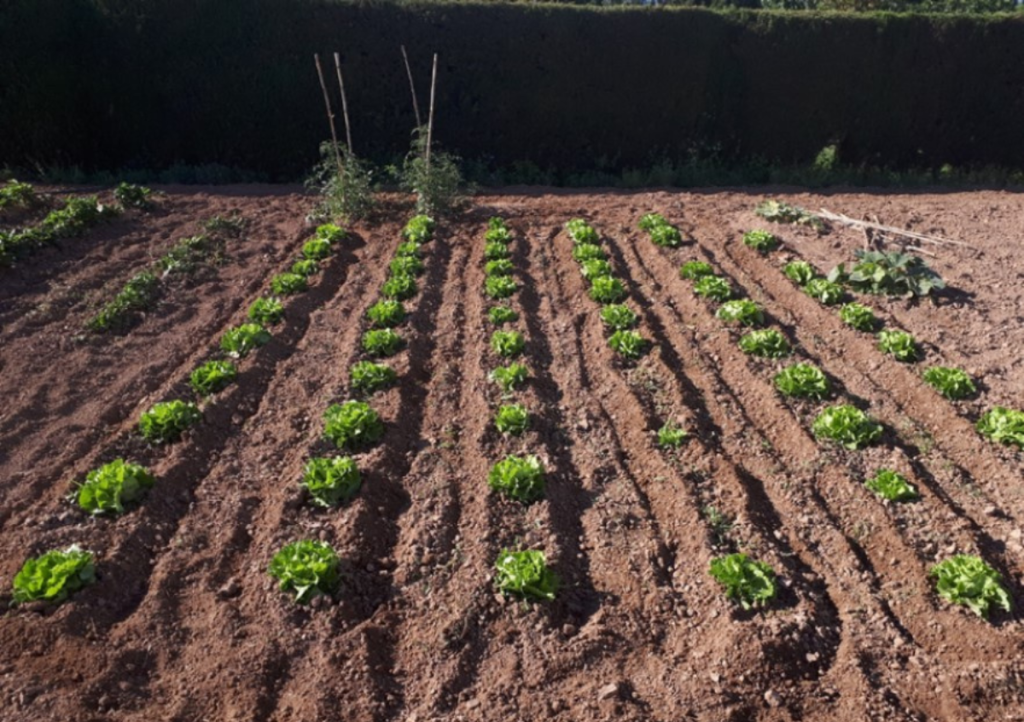
Crop: Lactuca sativa of the ICEBERG variety, grown in a calcareous soil (carbonate content 27%), moderately deep (0.7 m), of moderately fine texture (loamy-argillaceous), without large elements. Soil fertility is high, with a nitrate level of 90 ppm, phosphorus 79 ppm and potassium 406 ppm. The application of NPK fertilizers is not necessary. Phytosanitary products are not applied either, as there are no pests and diseases during the development of the crop. Weeding is done manually.
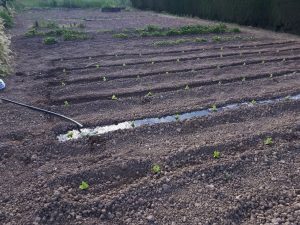
Work protocol: 1-Field preparation. 2-Plantation of 6 rows of lettuce (T0 (control) and 5 treatments), with 6 lettuce in each row. 3-Watering, weeding and pest control. 4-Harvesting, sample collection and data analysis.
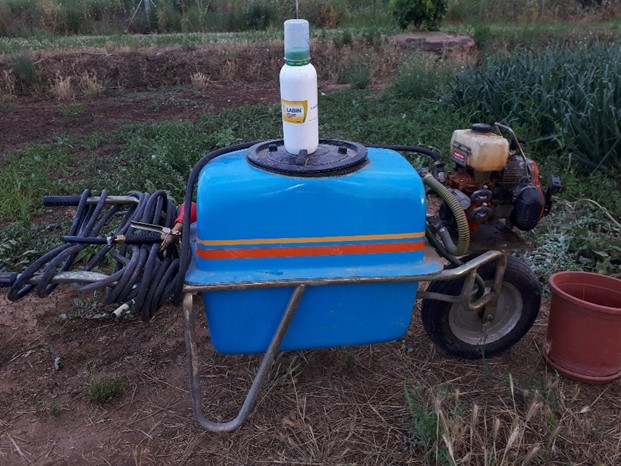
Objective: To assess the increase in the absorption of other nutrients present in the substrate, production and post-harvest shelf life monitoring. Applications: 5 foliar treatments of the product LABISINERGIC, with the treatments in Table 1, with a volume of broth sufficient for the entire trial area, applied with a wheelbarrow atomizer. No other foliar treatment was carried out on the trial plot. Two applications were made. The first application was made on June 7, 2021, once the crop was established in the early stages of vegetative development. The second application was made on August 12, 2021, when the crop was at 75% of its total vegetative development.
Results
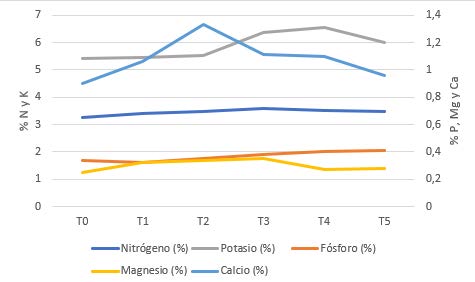
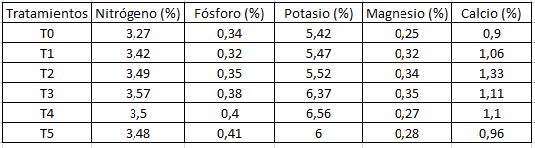
Nutrient uptake: At the end of the trial harvest, a composite sample of each treatment is prepared to analyze the nutrient content. The content of N, P, K, Mg and Ca is analyzed with the different treatments applied. The results show that the LABISINERGIC treatment shows significant differences in terms of increased absorption of the following nutrients: potassium and calcium (see Table 2 and Graph 2). The treatments with the highest percentage of potassium were treatments 3 and 4 (0.8 to 1.5 L/ha) and for calcium, treatments 2 and 3 (0.4 to 0.8 L/ha).
Yields: At the end of the trial harvest, a composite sample of each treatment was prepared to analyze the individual weight of each treated lettuce, as well as the average weight obtained per treatment. The highest average weight was obtained in treatment number T4 (1.5 L/ha), with an average weight of 360 grams per lettuce. No significant differences were obtained among the other treatments applied (Tukey’s test, with a significance of 0.05).
3. Evaluation of post-harvest life: At the end of the trial harvest, all the lettuces harvested are stored in a refrigerated chamber at -4 ºC. After 10 days, the condition of each lettuce is visually evaluated and the differences between treatments are assessed. Treatments with LABISINERGIC showed a better appearance and color than untreated lettuce (T0). As for the treatments with LABISINERGIC, no significant differences were obtained between them.
Conclusions
1-Application of LABISINERGIC in the cultivation of LECHUGA, leads to an increase in the nutritional content of Potassium (K) and Calcium (Ca). 2-Applying 3 L/ha of LABISINERGIC (in two applications of 1.5 L/ha each), leads to an increase in lettuce weight and therefore, an increase in production per hectare (kg lettuce/ha). 3-Application of LABISINERGIC in the cultivation of LECHUGA, leads to an improvement in the post-harvest preservation of the leaves and a better visual aspect in the placing on the market of the same. 4-No symptoms of phytotoxicity were observed at any stage or repetition of the test, at any dose tested.